I love being a mentor in the SHRM Foundation’s mentoring program. (Learn more here!) The program is 3 months and the SHRM Foundation matches a mentor and a mentee to focus on career aspirations, skill development and networking. This cohort started in February and I was matched with my mentee, an HR Emerging Professional obtaining a Master’s Degree and with about ~1 year of HR experience. Our first call was fabulous, and we had such a good discussion with aha moments that I felt called to share here. Send me a message if any of this resonates with you! I hope it’s helpful.
My mentee asked – what are the top 3 skills that helped you advance as a young professional? I responded with communication, rapport building, and being proactive.
Rapport building: This 100% is what has helped me stand out in my career. When meeting a hiring manager or leader in my company for the first time (I still do this to this day!) I take at least 1 minute at the beginning of the meeting to start the conversation off on a fun note and to make myself memorable. Recently, I met with a hiring manager to kick off a search at our Richland, WA facility. Of course I looked him up on LinkedIn prior to the meeting and gathered he had relocated to the area (from a couple hours away) for his position. I asked him how he was adjusting to the area and what he liked to do for fun. I had just visited Seattle, Olympic National Park and Mount Rainier over the summer, so I was able to tie in an interest of mine to the conversation. We were smiling and laughing within the first minute, which helped him relax and open up throughout the rest of the intake meeting. In HR, it’s our job to deliver great service to your business, and you can do so in a way that feels good and authentic to you. Sometimes getting straight into business is the appropriate route, but I’ve found that most of the time, it’s okay to start a meeting with some light hearted conversation. People then look forward to the next time they have to speak with me and work with me. They know I have an interest in them.
Communication: The standard answer I know. But when I really think about it, as a young professional, I rarely had the answers when coworkers or business leaders came to me. BUT they kept coming to me because I did what I said I was going to do. If I needed more context, I was curious and asked questions. I listened, took good notes, and communicated to them what action I would take and when I would follow up with them by. If I still didn’t have what I promised, I would follow up with an update. I still do this to this day. If I don’t have candidates to submit for an open search, I still send my hiring manager an update on the progress. You can advance your career so much through communication because it boosts your credibility. We all have the power to be accountable and vulnerable. It can be uncomfortable to continually have to say I don’t know and I’ll find out, but it’s better than communicating nothing at all.
Being proactive: Another one that is in your control. If you notice a system/process/people issue, ask a thoughtful question or make an observation. Get comfortable early in your career speaking up and using your voice. I realized that most of the time, my intuition was right on and my boss or teammate would agree that something new, better or different could be done. Being proactive (without over stretching yourself) is also a great way to get more HR experience under your belt and add impact and results onto your resume.
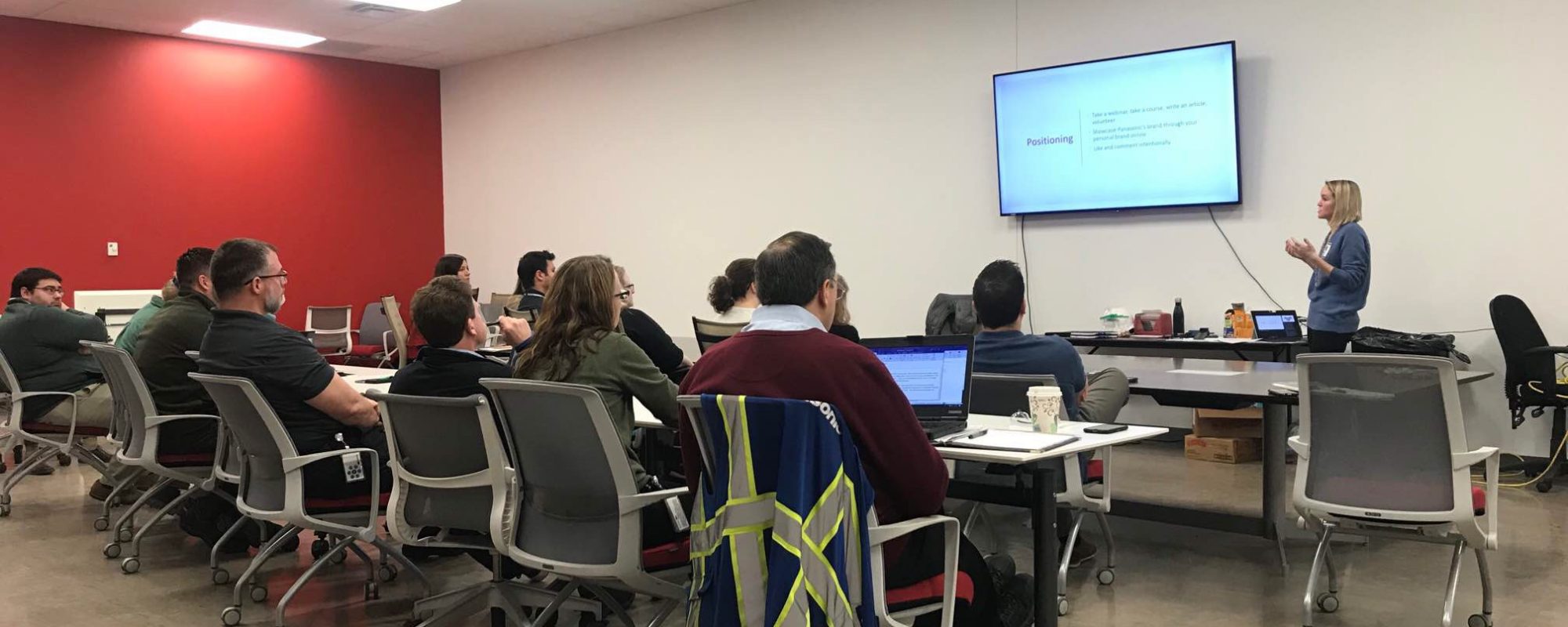
The next chunk of our conversation was about being your authentic self and leveraging your personality and voice in a way that feels good to you. (if you’ve ever attended one of my speaking sessions on building your brand, using LinkedIn, or elevate and uplift the next generation of HR leaders, you’ve heard me talk at length on how to do this!) HR college students/young/emerging professionals have heard over the years that HR is a good field to go into if you’re a “people person.” Being a people person means you CARE about people, but somehow being a people person got this meaning that you have to be extroverted and outgoing. Some folks don’t consider themselves extroverted and outgoing, so they think HR isn’t a good career path for them. One of the things I love about HR is that there is literally room for everyone’s skills and strengths in the field. Whether it’s recruiting, HRIS, compensation, benefits, payroll, training, employee relations – various skills and strengths are needed for each of these areas. We talked about how she considers herself shy and quiet, but she’s made peace with it. What an AMAZING thing to make peace with so earlier on in your career. Don’t spend precious time and energy trying to be someone that you know you are truly not. Now, we can all stretch and learn new skills that don’t come naturally to us (and we should!) but knowing who you truly are is an amazing gift because now you can start to leverage that in your role and make it a strength, rather than trying to change it. If you also consider yourself shy or quiet, I guarantee you are still needed in HR if you have an interest to be here. (:
The last topic we talked about in our call was about what is in your control vs. out of your control. As I mentioned, as young professionals we will not always have all the knowledge and answers, but we can control how we respond to employees questions and concerns in those moments. We can’t control how an employee is going to respond to feedback, but we can control how prepared we are for that conversation and deliver the feedback kindly. We can’t always control how helpful our boss is going to be in our career development, but we do have control over our careers and we can join programs such as the SHRM Foundation mentoring program, a local networking group, or be more active on LinkedIn. We have the power to be curious, resourceful and keep a focus on our personal and professional development.
Have a great week ahead friends and I’ll see you again on the blog here soon!
 Claire is Coaching
I am so happy you shared this in the meeting today!
LikeLike